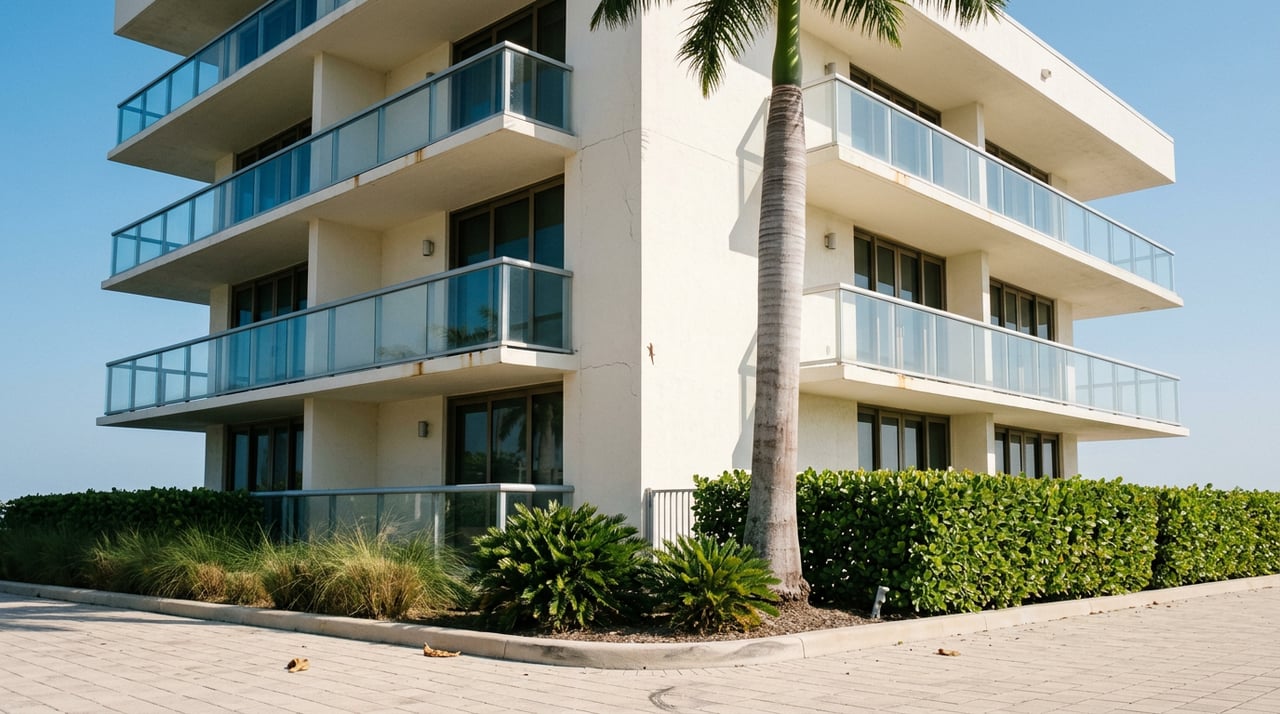
Longboat Key Condo Milestone Inspection Passed? Check This Next
Every condo building on Longboat Key that needed a milestone inspection got one, and every single one came back structurally sound. That is not the headline most buyers expect walking into a Florida condo purchase in 2026. It is also not the number that should shape your offer.
The building passing inspection tells you almost nothing about what you will pay next year. A different document does that, and it rarely makes the news.
Longboat Key's Planning, Zoning and Building Director, Allen Parsons, has confirmed that 198 buildings on the island required milestone inspections under Florida's post-Surfside safety law. As of April 2026, all 198 had been inspected. All passed. Only two needed a follow-up Phase 2 review, the deeper structural investigation triggered when an engineer spots something worth a closer look during the initial visual pass.
The inspections themselves were performed by outside engineering firms, including Tampa-based Thornton Tomasetti, which documented everything from roof conditions to support beams to staircases on some of the island's older mid-rise buildings. The south end of Longboat Key carries some of the oldest stock on the island: Beaches of Longboat Key, built in 1984, Regent Place of Longboat Key, built in 1995, and Longboat Key Towers, built in 1970. These are exactly the kind of buildings a cautious buyer might assume are the riskiest on the market. Structurally, based on the inspection results, they are not.
That is worth sitting with, because it cuts against the "condo cliff" narrative that circulated after the 2021 Surfside collapse. Longboat Key's building stock, inspection by inspection, has held up.
The milestone inspection and the Structural Integrity Reserve Study get talked about as if they are the same check. They are not, and confusing them is where buyers get surprised at the closing table.
| Milestone Inspection | Structural Integrity Reserve Study (SIRS) | |
|---|---|---|
| What it evaluates | Whether the building is structurally sound right now | Whether the association has saved enough to pay for future repairs |
| What a clean result tells you | The concrete, roof, and load-bearing systems are in good condition | Nothing on its own, it is a separate document |
| What a bad result triggers | A Phase 2 inspection, possibly repairs | Higher monthly dues or a special assessment |
| Why it matters to a buyer | Confirms the physical asset is safe | Confirms whether you will get a bill in year two |
A building can pass its milestone inspection with a clean bill of structural health and still hit its owners with a six-figure special assessment, because the SIRS is where a decade of underfunded reserves finally shows up on paper. That is the document that predicts your carrying costs. The inspection predicts whether the building falls down. On Longboat Key right now, almost nobody is asking the second question anymore, because the first one has already been answered for nearly every building on the island.
Your Observer reported that before 2022, Florida condo associations only had to reserve money for painting, paving, and roofing. Everything else, plumbing risers, structural elements, waterproofing, was optional. Many associations did exactly that for years, keeping quarterly dues artificially low.
That option is gone. Under HB 913, passed in 2025, associations can no longer waive reserve funding for the structural components identified in a SIRS once their budget is adopted. Florida's Division of Condominiums confirms that owner-controlled associations had to have their SIRS reserves funding underway by January 1, 2026. For boards that spent a decade keeping reserves thin to hold dues down, that date arrived like a bill coming due all at once.
David Novak, whose Longboat Private Services manages more than 900 residential units on the island, put it plainly: there is no magic to get around being a good steward of the property. Associations that reserved responsibly for years are simply funding a plan they already had in place. Associations that didn't are now catching up, and that catch-up cost has landed on some owners as special assessments running anywhere from $10,000 to well over $100,000 per unit, depending on the building's age, exposure, and how long its board deferred the inevitable.
This is the mechanism buyers miss. Two buildings on the same stretch of Gulf of Mexico Drive, similar age, similar construction, similar inspection results, can carry wildly different financial pictures. The difference isn't the concrete. It's whether the board was honest with its own owners for the last ten years.
For any Longboat Key condo built before the early 1990s, ask for these documents before closing:
There is a legal backstop here too. Under the Florida Supreme Court's Johnson v. Davis standard, a known material defect, including an underfunded reserve account or a documented pending assessment, has to be disclosed to a buyer. It doesn't remove the burden of asking. It does mean a seller who already knows the answer isn't supposed to let you find out at the closing table.
By early 2026, Longboat Key listings started leading with language that would have sounded strange three years ago: "SIRS Compliant," "Milestone Inspection Passed," "Reserves Fully Funded," printed in bold rather than buried in disclosures. Buildings marketing that language are increasingly commanding what local agents have started calling a resilience premium, the idea that a certified, fully reserved 1980s tower with ten-foot ceilings and a Gulf view is a genuinely different asset than an identical-looking building still working through its reserve catch-up.
Treat the label as a starting point, not proof. Ask to see the actual SIRS and the funding schedule behind it. A board can describe its reserves as "on track" while still phasing in full funding over several years. The document tells you where they actually stand today, not just the word they chose for the listing.
Does a passed milestone inspection mean no special assessment is coming? No. The inspection confirms the building is structurally sound today. It says nothing about whether the association has the money saved to keep it that way, which is what the SIRS is for.
Is Longboat Key's condo stock unusually risky compared to other Gulf Coast markets? Based on the inspection results reported so far, the physical buildings appear sound across the island, including some of its oldest towers. The variation buyers are seeing is financial, tied to how consistently individual boards funded reserves before the rules changed, not structural.
What's the one-sentence difference between the two documents? The milestone inspection tells you if the building is safe. The SIRS tells you if you're about to get a bill for keeping it that way.
A clean inspection result feels reassuring, and on Longboat Key, it should be. But the number that actually determines your first year of ownership costs lives in a different report, one that rarely gets mentioned in the listing description. Reading a SIRS, understanding a board's funding history, and knowing which buildings on the island have already absorbed their catch-up assessments and which haven't takes more than a quick document request. It takes someone who has sat across the table from these boards before.
Juli Pearce works with buyers moving into Longboat Key's condo market from out of state and across the country, walking through building-specific reserve documents before an offer goes in, not after. If you're evaluating a specific building on the island, Let's Connect.
This article is general information, not legal, tax or financial advice. Consult a qualified professional about your situation.

Let Julianne guide you through Sarasota’s luxury real estate market with the expertise, insight, and personalized attention you deserve. From beachfront estates to serene golf course homes, your ideal Florida lifestyle is just a phone call away.